

How Roller Skates Should Fit: Size and Performance Guide
How should roller skates fit? They should hold the heel securely, support the midfoot and leave the toes in a natural position without crushing, curling or persistent numbness. The boot should feel close and controlled, but pain is not proof of a performance fit.
Quick answer: measure both feet, use the current size chart for the exact skate, check length as well as width and foot volume, then test the skates in a bent skating stance. A secure closure can refine a correct fit; laces, insoles and break-in time cannot rescue the wrong size or shape.
Measure both feet before choosing a size
Skate sizes are not reliably interchangeable with street-shoe sizes or between brands. Measure in the socks you expect to wear, preferably later in the day when feet may be slightly larger. Stand with weight distributed normally and measure from the back of the heel to the longest toe.
- Place paper on a hard floor against a wall.
- Stand with the heel lightly touching the wall and the foot pointing straight ahead.
- Mark the end of the longest toe without angling the pencil underneath it.
- Measure the distance in millimetres.
- Repeat for the other foot and use the larger measurement when consulting the exact model’s chart.
- Measure width at the broadest part if the chart provides width guidance.
Length and width do not describe the whole foot. Instep height, arch shape, heel width and overall volume affect whether a boot can hold the foot without excessive pressure. If two sizes both look possible, the maker’s current guidance or a qualified skate fitter is more useful than guessing.
Roller skate fit by area
| Boot area | Good fit | Warning sign |
|---|---|---|
| Toes | Natural position with light contact only if the design calls for it | Curling, crushing, burning or persistent numbness |
| Heel | Held securely with minimal lift during knee bend | Repeated lifting, rubbing or a need to overtighten laces |
| Midfoot | Close, even contact and useful control | Sharp pressure, sidewall bulging or uncontrolled movement |
| Instep | Closure lies securely without cutting into the foot | Pain, pins and needles or loss of circulation |
| Ankle and cuff | Support appropriate to the boot while allowing the intended stance | Pressure on bone, edge bite or inability to bend correctly |
Check fit in a skating stance
Sitting or standing upright does not show how the foot behaves while skating. Lace both boots, stand on a stable non-rolling surface and bend the knees over the toes while keeping control. The heel should settle into the back of the boot, and the toes should not be forced to curl.
Next, shift weight gently from side to side and simulate a controlled stride. Look for heel lift, foot sliding, concentrated pressure and any delay between moving the foot and feeling the skate respond. Keep wheels protected and follow the retailer’s return conditions while doing indoor fit checks.
Width and volume can matter more than extra length
A skater with a wide forefoot may choose a longer boot to gain room, then end up with heel lift and poor control. A narrow foot may slide inside a boot whose stated length is correct but whose volume is too generous. The better solution is a model and width profile that match the foot.
Do not expect aggressive heat moulding, thick socks or improvised padding to convert an incompatible boot shape. Only heat mould a boot when its manufacturer specifically permits it, and follow the exact temperature and process instructions.
Use lacing to refine a correct fit
Laces manage tension zones; they do not change the boot’s basic length or shape. Begin with even, moderate tension from the forefoot upward. The heel should be seated before the upper section is secured. If toes become numb or the instep throbs, loosen the affected zone and reassess the underlying size and volume.
Different lacing patterns can reduce tension over a sensitive area or improve heel hold in an otherwise suitable boot. The roller skate lacing guide explains those patterns and the checks to perform before rolling.
Bont waxed skate laces
Waxed laces can help a skater maintain separate tension zones in a correctly fitted boot. Choose a suitable length for the boot’s eyelet count and never use extra tightening to compensate for a boot that is too large.


Break-in discomfort versus the wrong fit
Some skate materials soften or conform with use, but break-in should not be used to justify sharp pain, toe compression or loss of sensation. A slightly firm upper may become more comfortable; the shell or sole length will not grow into the correct size.
| Observation | Likely action |
|---|---|
| Even, mild firmness with no numbness | Use short indoor checks and follow the maker’s break-in guidance |
| Heel lifts during every knee bend | Recheck size, heel shape, volume and closure technique |
| Toes curl or hit the front under normal stance | Stop and reassess length and toe-box shape |
| Sharp pressure on a bone | Stop; do not assume pain will disappear with use |
| Tingling, numbness or colour change | Remove the skate promptly and reassess fit and tension |
Persistent pain, numbness, swelling or skin injury warrants professional advice. People with circulation problems, diabetes, reduced sensation or a previous foot injury should take particular care and seek appropriate medical guidance when needed.
Fit affects control and efficiency
When the foot moves before the boot responds, edging and balance can feel delayed. Heel lift can create friction, while excessive length may make crossovers and transitions less precise. A close, compatible fit helps transfer movement to the plate without relying on painful tension.
Boot fit is only one part of performance. Plate alignment, truck adjustment, cushions, wheel size and hardness, bearings and toe-stop setup all affect how a roller skate responds. Change one variable at a time so the result is easier to evaluate.
Tune the setup only after fit is correct
Sure-Grip Super Cushions
These replacement barrel cushions provide a non-Bont tuning option for compatible quad plates. Confirm the cushion shape, dimensions, hardness and plate compatibility before ordering.

Choose the skate around the skater and use
A recreational high-top boot, a speed-oriented low-cut boot and a dance setup can have very different intended fits and support. Start with the activity, then compare models whose shape matches the foot. Our guides to roller skates for women, roller skates for men and kids’ roller skates provide useful shopping context, but the individual measurement remains decisive.
Children should not receive oversized skates to grow into. Excess length can reduce control and create rubbing. Measure regularly and replace the size when the current boot no longer allows a safe, natural foot position.
Protect the first test session
After the indoor fit check, begin on a smooth, controlled surface away from traffic. Use a properly fitted helmet, knee pads, elbow pads and wrist guards appropriate to the session. Keep the first roll short, then remove the skates and inspect the feet for concentrated redness, blisters or numb areas.
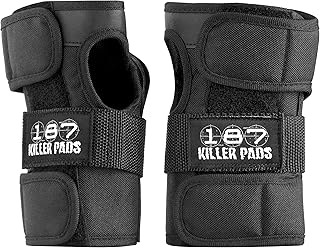
187 Killer Pads wrist guards
These wrist guards are a skating-specific alternative to compare. Follow the live measurement guidance, wear each guard in the intended orientation and confirm free finger movement without tingling.
First-roll fit checklist
- Both feet were measured and the larger measurement was checked against the exact chart.
- Toes remain in a natural position without curling or numbness.
- Heels stay seated during knee bends and gentle weight shifts.
- Laces are secure without sharp instep pressure.
- No part of the boot causes tingling, burning or circulation change.
- Wheels, axle nuts, trucks and toe stops were checked before rolling.
- Protective equipment is fitted and the test area is smooth and controlled.
- The first session is short enough to identify pressure points early.
Frequently asked questions
Should roller skates fit tighter than shoes?
They generally need a closer, more controlled fit than casual shoes, especially at the heel and midfoot. Closer does not mean painful: toes should not be crushed and there should be no numbness or circulation restriction.
Should my toes touch the end of roller skates?
That depends on the boot design and maker’s guidance. Light contact may be normal in some performance fits, but toes must not curl, jam or become numb when the knees bend.
How much heel lift is acceptable?
The heel should feel securely seated. A small amount can occur in some boot constructions, but repeated visible lift, rubbing or delayed control suggests the size, shape, volume or lacing needs reassessment.
Will roller skates stretch?
Some upper materials may soften or conform, but the sole and basic length do not expand into a new size. Never rely on break-in to solve crushed toes, sharp bone pressure or numbness.
Can thicker socks fix skates that are too big?
Thicker socks may alter volume slightly, but they can bunch, retain heat and create pressure. They are not a dependable fix for excess length or an incompatible boot shape.
Bottom line
Roller skates should fit securely at the heel and midfoot while allowing a natural, pain-free toe position. Measure both feet, match length, width and volume to the exact model, and test the boots in a skating stance. Once the fit is correct, use lacing and compatible components to refine performance one change at a time.
This article contains paid affiliate links. Speedskating.com may earn a commission from qualifying purchases at no additional cost to you.


