

Roller Skate Helmet Fit: A Practical Sizing Guide
A roller skate helmet should sit level, feel secure without creating pressure points, and stay in place when you look around or bend into a skating stance. If it rocks forward, tips back, shifts when you move your head, or needs an overtightened chin strap to stay put, it is not set up correctly. A few quiet checks before you roll are more useful than trying to adjust it while moving.
Quick answer: measure the widest part of your head, use the exact helmet maker’s current chart, set the helmet level just above the eyebrows, adjust the rear fit system or pads if supplied, and fasten the chin strap so it is secure but comfortable. Check the certification label and the helmet’s intended use, then replace it after a significant impact or whenever the maker says it is no longer serviceable.
This is general buying and fit information, not a product test, safety certification, or guarantee that every helmet suits every skater. Follow the instructions for your exact helmet, the rules of your skating venue, and any requirements that apply where you skate.
Featured image: illustrative AI-generated image.
Start with the right kind of helmet
Do not choose a helmet by colour or general size alone. Look at the use listed by the helmet maker and inspect the certification label inside the helmet. A multi-sport skate-style helmet may be intended for activities such as skating, skateboarding, or cycling, but the label and instructions for the exact model are the source of truth. A label is not a substitute for proper fit, condition, or sensible skating decisions.
For a recreational session, a helmet is one part of a wider safety setup. The U.S. Consumer Product Safety Commission advises skaters to wear protective gear, practise stopping, and avoid traffic and unsafe surfaces. Add wrist, knee, and elbow protection when it suits your skating and the surface, then make sure each piece of gear can move with you without twisting or slipping.
Measure before comparing sizes
Use a flexible tape measure or a non-stretch string and ruler. Wrap it around the widest part of the head, usually about one inch above the eyebrows and around the fullest point at the back of the head. Keep it level, snug but not tight, and measure twice. If the two results differ, measure again and use the larger reliable result.
Write the measurement down in the unit used by the helmet chart. Do not translate a clothing size, shoe size, age range, or the size of an old helmet into a new brand’s chart. Shell shapes, pad sets, and adjustment systems vary. If your measurement falls between sizes, follow the maker’s stated advice and only keep a size that can be adjusted securely without painful pressure.
| Fit area | What you want | What signals a problem |
|---|---|---|
| Position | The helmet sits level, low on the forehead, just above the eyebrows. | It is tipped back, blocks vision, or can be pushed far up and down. |
| Side-to-side movement | The shell moves with the scalp when you gently rotate it. | The shell slides across the hair or skin independently. |
| Forehead contact | Even, comfortable contact from the front padding. | A gap at the forehead or a sharp, localised pressure point. |
| Rear hold | The back is settled against the head with the supplied adjustment system correctly set. | The helmet lifts away or rocks back and forth. |
| Chin strap | Secure under the chin, with normal jaw movement and no twisting. | Loose webbing, a buckle against the throat, or a strap used to compensate for an oversized shell. |
Set the helmet level, then adjust it
Put the helmet on before fastening the strap. Its front edge should sit low and level, not perched on top of the head. If the model has a dial, cradle, interchangeable pads, or a similar fit system, use it as the instructions describe. Make small adjustments and reassess rather than tightening everything at once.
Next, centre the side straps so they form an even V just below each ear. Fasten the chin buckle and tighten the loose end until the strap is secure but comfortable. You should be able to open your mouth and move your jaw normally. A chin strap helps retain a correctly sized, correctly positioned helmet. It cannot make a loose or badly shaped shell fit safely.
With the helmet buckled, use both hands to gently try to move it forward, backward, and side to side. Your skin and scalp should move with it. If the shell slides around, revisit the size, pads, and adjustment system. If it creates a hot spot, headache, numbness, or tingling, loosen the supplied adjustment if appropriate or try a different size or shape. Do not carve, compress, or add unapproved padding to force a fit.
Do a still-standing check before you skate
Fit is easiest to assess while stationary. Put on the clothing and hair arrangement you normally skate in, then stand in a relaxed skating stance. Bend the knees, look over each shoulder, look up and down, and make a few controlled head turns. The helmet should remain level and should not obscure your view.
- Check the shell for cracks, dents, crushed foam, loose hardware, damaged webbing, or a missing buckle.
- Confirm the helmet sits level before you touch the chin strap.
- Set the rear fit system or approved pads for even contact around the head.
- Centre the side straps below the ears, then buckle and snug the chin strap.
- Gently try to move the helmet in each direction. It should move with your head, not around it.
- Remove the helmet and repeat the check if anything feels uncomfortable or uncertain.
For the rest of your setup, use our roller skate pre-skate inspection checklist before leaving home or starting a session. A stable helmet is valuable, but it works alongside good wheel and hardware checks, a suitable surface, and a stop you can already perform.
When a helmet needs to be replaced
Replace a helmet after an impact when the manufacturer directs you to do so, even if the outer shell looks normal. Also replace it if you find a crack, crushed liner, loose or damaged strap, broken buckle, worn adjustment system, or a fit that cannot be restored with the supplied parts. Age, heat exposure, storage conditions, and repeated use can matter too, so follow the helmet maker’s care and replacement guidance.
Do not lend a helmet without checking its condition and fit for the next wearer. A helmet that happens to buckle is not automatically suitable for another head shape. Store it away from high heat, harsh chemicals, and heavy objects that could damage the shell or liner. Clean it only as the maker allows, and do not paint, drill, or modify it unless the instructions specifically permit that work.
A verified Amazon option to compare
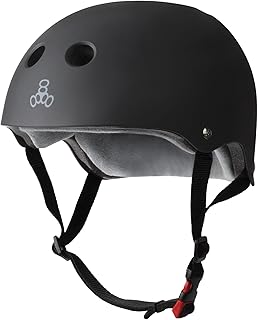
The Triple Eight Certified Sweatsaver helmet is a relevant Amazon option for skaters looking for a multi-sport helmet to compare. Before ordering, confirm the selected size and colour, current certification labels, intended activities, included pads, availability, shipping, return terms, and the maker’s fitting instructions on the live listing. This guide does not test the product or determine whether its shape is right for your head.

Common roller skate helmet fit questions
How tight should a roller skate helmet be?
It should feel comfortably snug and stable. It should not rock or slide independently of your head, but it also should not create pain, numbness, tingling, or a concentrated hot spot. A tight chin strap is not a solution for a loose shell.
Should a skate helmet sit above the eyebrows?
Yes. A level helmet usually sits low on the forehead, just above the eyebrows, without blocking normal vision. A helmet tipped far back leaves more of the forehead exposed and can shift more easily.
Can I keep using a helmet after a fall?
Check the exact maker’s impact and replacement guidance. If the helmet received a significant impact, or if you see damage, stop using it until you can confirm it remains serviceable. When in doubt, replace it rather than relying on an uncertain helmet.
Fit first, then make the first roll small
A good roller skate helmet fit comes from the correct size, level position, even contact, properly adjusted straps, and a calm inspection before you move. Take the extra minute to measure, check the labels, and test the fit while standing still. Then choose a clean, familiar place to skate, wear the rest of the protection appropriate to your session, and keep the first roll slow enough to notice a problem early.
This article contains paid affiliate links. Speedskating.com may earn a commission from qualifying purchases at no additional cost to you.

