

Park Roller Skating: Beginner Skills and Safety Guide
Park roller skating uses quad skates on ramps, banks, bowls and other skatepark features. It can be creative and rewarding, but the consequences of a missed edge are greater than on flat ground. A safe introduction begins away from the ramps: stable stance, dependable stopping, controlled transitions and the ability to fall and recover under qualified instruction.
Quick answer: wear equipment intended for trick skating, inspect the skates, learn the park’s direction and etiquette, then begin with flat ground and the smallest bank. Do not drop into a ramp until an instructor or experienced spotter has confirmed the prerequisites.
Park skating is not the first beginner step
Before entering a feature, a skater should be able to roll, turn, stop and step over small obstacles without panic. Practise forward and backward stance, staggered feet, knee bend and controlled speed on flat ground. A crowded public session is not the place to learn basic balance.
Take a lesson where possible. A coach can check stance and choose a progression suited to the park and skater. Local facility rules may require specific equipment, age supervision or session times.
Protection for trick skating
Use a helmet intended and labelled for skateboarding or trick roller skating, rather than assuming any recreational helmet covers the activity. Inspect the certification label and instructions on the delivered helmet. Knee pads, elbow pads and wrist guards should remain centred through a deep bend and should not create numbness.
The U.S. Consumer Product Safety Commission advises skaters to wear safety gear and learn how to stop. Protective equipment cannot eliminate injury risk, and damaged equipment should be replaced according to its instructions.
Inspect the roller skates
- Check laces, straps and boot attachment.
- Confirm axle nuts are secure while the wheels still turn as intended.
- Inspect trucks, kingpins and cushions for damage or unexpected movement.
- Check toe stops or plugs for wear, correct engagement and secure hardware.
- Look for cracked, chunked or badly worn wheels.
- Confirm that no loose clothing or lace can reach the wheels.
Use the pre-skate inspection checklist before every park session. Setup changes affect handling, so test them on flat ground first.
Learn skatepark etiquette
- Watch the traffic pattern before entering.
- Wait for a clear run and make your intention visible.
- Do not sit or leave equipment on a feature.
- Exit the landing area promptly after a run.
- Respect local rules and sessions reserved for particular users.
- Communicate calmly after a near miss instead of escalating conflict.
A smaller uncrowded park is often a better learning environment than a famous busy facility. Surface condition and visibility matter more than feature count.
A controlled beginner progression
1. Flat-ground stance and falling practice
Practise staggered feet, bent knees and looking ahead. Learn how to use the fitted knee pads under qualified instruction without reaching stiff arms toward the ground.
2. Small surface changes
Roll over painted lines and very shallow transitions at low speed. Keep the skates staggered so one wheel does not meet the change with both feet parallel and locked.
3. Gentle bank
Approach a small bank straight, maintain knee bend and roll back down without turning across other users. Begin low on the feature.
4. Pumping
Learn to extend and compress through a transition without jumping. Correct timing can build speed quickly, so start with a very small range.
5. Kick turns and stalls
Introduce direction changes or coping contact only with coaching and a clear landing area. Do not copy a trick seen online without understanding foot position and exit.
6. Drop-ins
A drop-in is not a beginner experiment. Learn it only after the required stance, ramp exit and fall strategy are reliable and a qualified instructor approves the attempt.
Three verified protection options
These Bont products were checked against Speedskating.com’s existing Amazon affiliate inventory. The images are owner-authorized. They do not replace a trick-skating helmet. Confirm size, included quantity and intended use on the live listing.
Bont Pro knee pads
Hard-cap knee pads are relevant for ramp practice. Measure against the current chart and make sure each cap stays centred during a deep stance.


Triple Eight Saver Series protective pad set
This three-piece knee, elbow and wrist protection set is a useful alternative for recreational skating. Check the live size chart, secure every strap and confirm that each hard cap stays centred through a full skating stance.

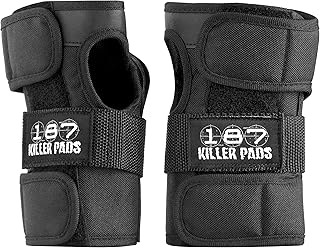
187 Killer Pads wrist guards
These wrist guards are a skating-specific alternative to compare. Follow the live measurement guidance, wear each guard in the intended orientation and confirm free finger movement without tingling.
Choose wheels and toe stops deliberately
Wheel hardness, width and edge shape affect grip and slide. The park surface, weather and skill plan should drive the choice; copying another skater’s setup may create too much or too little grip. Check the skate wheels guide before changing diameter or hardness.
Toe stops need adequate material and secure hardware. Some advanced setups use plugs or slide blocks, but those changes alter the skate and should follow the component instructions. Test every adjustment on flat ground.
Frequently asked questions
Can regular roller skates be used at a skatepark?
Only if their design, condition and components suit the intended use. Recreational skates are not automatically built for repeated ramp impacts. Check the maker’s use guidance.
What should a beginner learn first?
Flat-ground stance, turning, stopping, staggered feet, stepping and controlled falls under instruction. Ramps come after those skills.
Should beginners remove toe stops?
No general rule applies. Toe-stop or plug configuration changes how the skate works. Follow the skate and component instructions and get coaching before changing it.
Build skill in small steps
Good park roller skating looks progressive because it is. Inspect the equipment, understand the traffic pattern and master one small surface change at a time. Keep the protective skate pads guide and roller skates hub nearby as the setup and skills develop.
This article contains paid affiliate links. Speedskating.com may earn a commission from qualifying purchases at no additional cost to you.


