

Indoor Roller Skate Wheel Hardness: A Practical 97A, 99A, and 101A Guide
Indoor roller skate wheel hardness is one of the clearest setup choices a rink skater can make, but the number stamped on a wheel is not a universal performance score. A 97A, 99A, or 101A wheel can feel different depending on its formula, profile, floor coating, temperature, body weight, and skating style. The useful goal is not to chase the highest number. It is to choose a wheel that gives predictable grip and roll on the rink you actually skate.
Quick answer: start with the rink surface and the control you need. A relatively softer indoor wheel can offer more grip and a calmer feel; a relatively harder wheel can roll freely and release more readily. Treat 97A, 99A, and 101A as comparison points within a manufacturer’s range, then test one change at a time rather than replacing every setup variable at once.
What the A number tells you—and what it does not
Most roller skate wheels use the Shore A hardness scale, usually shown as a number followed by A. In simple terms, a higher A number describes a harder material within that scale. It does not tell the whole story about how fast, grippy, durable, or suitable a wheel will be. Two wheels marked 99A can still behave differently because their polyurethane compounds, hubs, width, and profiles differ.
That is why the best question is not “Is 101A always better than 97A?” It is “What feels controlled on this floor when I turn, stop, and put power down?” Your rink’s floor finish and cleanliness matter. So do your technique and the type of skating you do: recreational laps, artistic work, rhythm skating, derby practice, or speed-oriented sessions put different demands on the wheel.
For a broader explanation of how durometer is used in skate-wheel decisions, see our wheel hardness guide. The hardware differs between inline and quad skates, but the habit of matching wheel properties to surface and intended use remains useful.
97A vs 99A vs 101A at an indoor rink
These ranges are not strict categories or promises. They are a practical starting point for comparing nearby indoor choices, especially when the wheels come from the same product family.
| Approximate hardness | What a skater may notice | Good reason to consider it | Check before committing |
|---|---|---|---|
| 97A | More settled contact and a little more willingness to hold a line on some coated floors. | You want added confidence while refining edges, turns, or basic control. | Make sure the extra grip does not feel sluggish or make transitions harder on your rink. |
| 99A | A middle ground that may balance roll and controlled traction for many indoor sessions. | You are moving from a softer or harder option and want a measured comparison. | Compare the whole wheel: width, diameter, profile, and compound still matter. |
| 101A | A firmer feel that may roll freely and release more readily on suitable smooth floors. | You already understand the rink surface and want a more responsive release. | Do not assume harder means safer, faster, or right for every skater. |
A new hardness can change how your skates react under pressure. Start on familiar, dry floor space and make easy laps first. Then try the movements that matter to you: a controlled stop, a shallow turn in both directions, a crossover, or a low-speed transition. If a wheel feels unexpectedly slippery, abrupt, or resistant, stop and reassess before building speed.
Start with the floor, not the number
Indoor surfaces vary more than many buying guides imply. A polished hardwood floor, a coated concrete rink, and a sport-court style surface can all make the same wheel feel different. Conditions can change during a session too: dust, humidity, cleaning residue, and traffic can alter the available grip.
Ask the rink whether it has a recommended wheel range or rules about wheel condition. That is useful local information, not a substitute for your own careful test. If you visit multiple venues, make a note of the wheel setup that feels predictable at each one. A small label in a skate bag or a phone note can be more useful than relying on memory after several sessions.
Wheel hardness is only one part of the contact patch. Diameter, width, lip shape, hub stiffness, bearings, axle hardware, and how tightly the wheel nut is adjusted also affect the way a skate rolls. Change one factor, skate slowly, and observe the result. Replacing wheels, bearings, cushions, and plates all at once makes it difficult to know which change produced the new feeling.
Measure your current wheel before buying
Remove one wheel only after the skate is secure and the small hardware can be kept together. Read any size and hardness marking on the sidewall, then measure the diameter and width if the marking is worn. Compare the new wheel’s dimensions with the old wheel and confirm it clears the plate, kingpin, boot, and toe stop throughout a gentle turn.
- Diameter: affects ride height and can affect clearance.
- Width: changes how the wheel sits under the plate and can change feel through turns.
- Profile: influences how much of the wheel meets the floor as you lean.
- Bearings and spacers: need to match the wheel and axle arrangement.
- Pack quantity: a pair of quad skates normally needs eight wheels for a full replacement.
If the wheel is a replacement rather than a complete setup change, keep the old parts organised until the new ones have passed a first roll. Our roller skate toe stops guide covers the same principle from another angle: check compatibility before assuming a common-looking part is interchangeable.
Use a controlled first-session test
- Inspect each new wheel, bearing, spacer, axle, and nut before installation.
- Install the wheels evenly and spin each one by hand. It should turn without obvious rubbing or wobble.
- Start with easy laps on a clean, familiar part of the rink.
- Test both turning directions and a controlled stop at low speed.
- Pause after a few minutes to check axle nuts, wheel spin, and any unexpected contact marks.
- Only then add the speed, footwork, or drills that belong to your normal session.
The U.S. Consumer Product Safety Commission advises skaters to wear appropriate protective gear, learn to stop safely, and avoid unsafe surfaces. A new wheel setup is a good time to return to those basics instead of assuming a familiar boot will behave exactly as it did before.
A Bont indoor-wheel option to verify
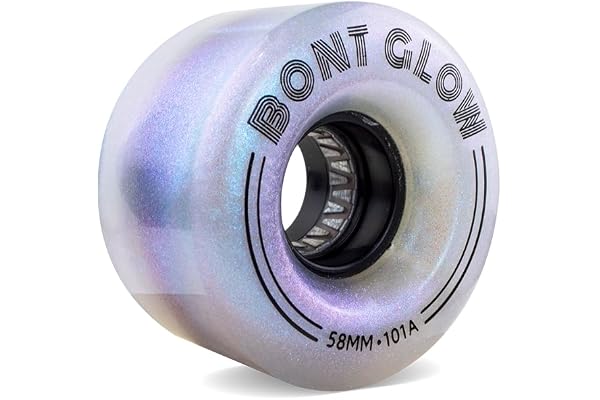
Bont Glow battery-free light-up roller skate wheels are a relevant option to inspect when you want a firm, compact wheel for an indoor setup with a light-up feature. The Amazon record used here identifies this listing as a 58 x 32 mm, 101A, four-pack. That makes it important to confirm the selected variation, current listing details, and whether two packs are required for your pair of quad skates. It is not a product test or a guarantee that this wheel is right for every rink.

Common indoor wheel-hardness questions
Should beginners always choose the softest indoor wheel?
Not necessarily. A wheel that feels too grabby can make some movements harder, while one that releases too easily can be unsettling. Start with the rink’s practical guidance, use a modest change from your current setup, and test conservatively.
Does a 101A wheel automatically make a skater faster?
No. Roll is influenced by the floor, wheel compound, dimensions, bearings, setup condition, and technique. A firmer wheel may feel quicker on one clean floor and less controlled on another.
Can I mix wheel hardnesses?
Some experienced skaters use mixed setups for a specific feel, but it adds variables. For a first hardness change, using the same wheel in all eight positions makes the result easier to understand. Once the baseline is familiar, make changes deliberately and test them at low speed.
Choose predictable control
The right indoor roller skate wheel hardness is the one that gives you repeatable control on your rink. Compare 97A, 99A, and 101A as nearby options rather than absolute labels; check dimensions and fit; and give every new setup a calm first-session test. That process is more useful than assuming a single number can solve every floor, skating style, and skill level.
Editorial note: This is general equipment information, not a product test, safety certification, or individual technical advice. The featured image is original illustrative media. Follow equipment instructions and rink rules.
This article contains paid affiliate links. Speedskating.com may earn a commission from qualifying purchases at no additional cost to you.


