

Best Roller Skate Pads for 2026: Fit and Protection Guide
The best roller skate pads cover the areas most likely to contact the ground, stay in position when you move and fit closely enough that they do not slide during a fall. A large plastic cap is not useful if the pad rotates off the knee or elbow.
Quick answer: start with a properly fitted helmet, knee pads, elbow pads and wrist guards. Measure against each maker’s current chart, test the pads in a skating stance, and choose the level of coverage for your actual use: recreation, rink, derby, trail or skate park.
Roller skate protection checklist
| Item | Fit check | Primary role |
|---|---|---|
| Knee pads | Cap stays centred through a deep knee bend | Helps protect knees during forward impacts and slides |
| Elbow pads | Does not rotate when arms bend and swing | Helps protect elbows in side or backward falls |
| Wrist guards | Secure without numbness or finger restriction | Supports and shields the wrist and palm area |
| Helmet | Level, snug and correctly fastened | Essential head protection |
| Retention | Straps and sleeves stay secure in motion | Keeps protective zones in the intended position |
| Condition | No cracks, torn stitching or exhausted padding | Ensures the equipment remains serviceable |
Wear a complete set of skating safety gear
The U.S. Consumer Product Safety Commission recommends a helmet, elbow pads, knee pads, wrist guards and gloves for inline skating. That is a useful baseline for roller skating too: protective equipment works as a system, and pads do not replace a helmet or learning how to stop safely.
Choose a helmet made and certified for the activity described by its manufacturer. Our skate helmet guide explains fit, coverage and replacement checks. Pads cannot prevent every injury, so skate within your ability and use a smooth area away from traffic while learning.
How roller skate pads should fit
Measure the limb at the position specified by the product’s size chart. Do not assume your clothing size determines pad size, and do not transfer a size from another brand without checking. If your measurement sits between sizes, follow the maker’s guidance and compare the retention design.
Put on the clothing you normally skate in, secure every strap, and take a low skating stance. Bend deeply, perform controlled crossovers and swing your arms. The caps should remain centred without pinching, numbness, circulation changes or restricted movement. A pad that feels secure while standing may still slip when the joint bends.
Knee pads: coverage and movement
Knee pads range from slim sleeves to larger hard-cap designs. Low-profile pads can feel less restrictive for controlled recreation, while park, derby and higher-consequence skating often call for greater coverage and secure retention. More bulk is not automatically better if the shape does not match your knee or prevents you from holding a stable stance.
Check that the hard cap covers the kneecap and remains centred through flexion. Straps should lie flat, hook-and-loop sections should close fully, and the pad should not interfere with the top of the skate boot.
Elbow pads: stop rotation
Elbow pads should cup the elbow without sliding toward the forearm. Test them with the elbow straight and bent, then simulate arm movement used for balance. A sleeve-plus-strap design can improve retention for some skaters, while others prefer a more open design for ventilation.
Make sure the upper and lower straps do not cut into the arm. If tightening is the only way to stop rotation, the pad shape or size may be wrong.
Wrist guards: support without losing control
Wrist guards need to sit in the orientation shown by the manufacturer, with splints and palm protection positioned correctly. They should not prevent you from moving your fingers or safely using a brake, and they must not cause tingling, numbness or colour changes in the hand.
Because hands naturally reach toward the ground in many falls, wrist guards are an important part of a roller skating set. See our roller skate wrist guard fit guide for measuring, fastening and replacement advice.
Three verified Bont protection options
These Amazon products were verified against Speedskating.com’s existing affiliate inventory. The Bont product images are owner-authorized. Confirm the current listing’s size, included quantity and colour before ordering because marketplace variations can change.
Bont Pro knee pads
These hard-cap knee pads are a relevant option for skaters seeking substantial knee coverage. Use the live size chart and test that the cap stays centred through a full skating stance.


Triple Eight Saver Series protective pad set
This three-piece knee, elbow and wrist protection set is a useful alternative for recreational skating. Check the live size chart, secure every strap and confirm that each hard cap stays centred through a full skating stance.

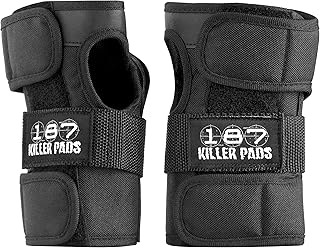
187 Killer Pads wrist guards
These wrist guards are a skating-specific alternative to compare. Follow the live measurement guidance, wear each guard in the intended orientation and confirm free finger movement without tingling.
Match protection to skating style
| Skating style | What to prioritise |
|---|---|
| Learning and recreation | Comfortable complete set that stays secure during repeated practice |
| Trail and outdoor | Reliable retention, ventilation and coverage for changing surfaces |
| Rink and dance | Mobility with enough protection for current skills and venue rules |
| Roller derby | League rules, secure high-coverage pads and easy pre-session inspection |
| Skate park | Substantial caps, secure retention and coverage suited to ramps and concrete |
Venue, club or competition rules may specify required equipment. Treat those rules as the minimum and choose more coverage when your speed, terrain or learning plan raises the consequence of a fall.
Inspect pads before every session
- Check hard caps for cracks, deep gouges or deformation.
- Inspect foam for permanent compression, tears or movement inside the cover.
- Pull gently on straps, stitching and buckles to find loose connections.
- Clear debris from hook-and-loop fasteners so they close fully.
- Put the pads on and confirm they still stay centred in a deep bend.
- Replace any item that no longer fits securely or has damage that can affect protection.
Follow the maker’s care instructions. Excess heat can damage some foams and plastics, while harsh cleaners can degrade fabrics or fasteners. Air-dry equipment fully after use and keep it away from direct heat.
Common pad-buying mistakes
- Buying one item only: knee, elbow, wrist and head protection have different roles.
- Choosing by clothing size: use the current product measurement chart.
- Testing only while standing: pads need to remain centred in a skating stance.
- Overtightening straps: numbness or circulation changes mean the fit is not acceptable.
- Using damaged gear: cracked caps and failed retention need replacement, not tape.
- Assuming pads prevent every injury: instruction, speed control and surface choice still matter.
Frequently asked questions
Do beginner roller skaters need knee and elbow pads?
Yes. Beginners fall while learning balance and stopping, so a complete set of properly fitted protective gear is a sensible baseline. A helmet and wrist guards are also important.
Should roller skate pads feel tight?
They should feel secure, not painful. They must stay centred through movement without causing numbness, tingling, restricted circulation or loss of control.
Can I wear pads over clothing?
Yes, if the product is designed and sized for it. Measure and test while wearing the same type of clothing you plan to skate in because fabric thickness affects retention.
When should roller skate pads be replaced?
Replace them after damage, failed straps or fasteners, cracked caps, severely compressed foam, or a fit change that lets them rotate. Follow any impact-replacement instructions supplied by the maker.
Fit is the most important feature
The best roller skate pads form a complete, secure system: helmet, knee pads, elbow pads and wrist guards that fit your body and stay in place through real skating movement. Measure carefully, choose coverage for your environment, inspect before every session and replace damaged equipment promptly.
This article contains paid affiliate links. Speedskating.com may earn a commission from qualifying purchases at no additional cost to you.


